global warming
Weather refers to atmospheric conditions that occur locally over short periods of time—from minutes to hours or days. Familiar examples include rain, snow, clouds, winds, floods or thunderstorms.
Climate, on the other hand, refers to the long-term regional or even global average of temperature, humidity and rainfall patterns over seasons, years or decades.
What Is Global Warming?
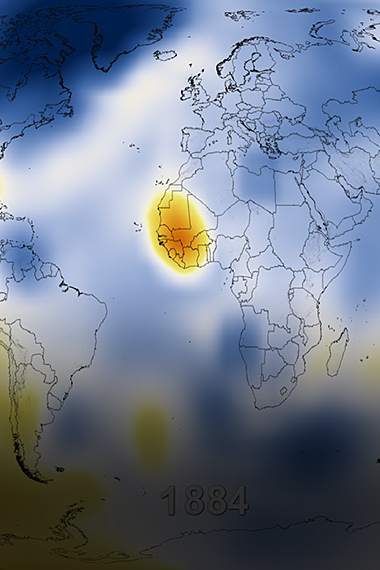
Global warming is the long-term heating of Earth’s climate system observed since the pre-industrial period (between 1850 and 1900) due to human activities, primarily fossil fuel burning, which increases heat-trapping greenhouse gas levels in Earth’s atmosphere. The term is frequently used interchangeably with the term climate change, though the latter refers to both human- and naturally produced warming and the effects it has on our planet. It is most commonly measured as the average increase in Earth’s global surface temperature.
Since the pre-industrial period, human activities are estimated to have increased Earth’s global average temperature by about 1 degree Celsius (1.8 degrees Fahrenheit), a number that is currently increasing by 0.2 degrees Celsius (0.36 degrees Fahrenheit) per decade. It is unequivocal that human influence has warmed the atmosphere, ocean, and land.
What Is Climate Change?
Climate change is a long-term change in the average weather patterns that have come to define Earth’s local, regional and global climates. These changes have a broad range of observed effects that are synonymous with the term.
Changes observed in Earth’s climate since the early 20th century are primarily driven by human activities, particularly fossil fuel burning, which increases heat-trapping greenhouse gas levels in Earth’s atmosphere, raising Earth’s average surface temperature. These human-produced temperature increases are commonly referred to as global warming. Natural processes can also contribute to climate change, including internal variability (e.g., cyclical ocean patterns like El Niño, La Niña and the Pacific Decadal Oscillation) and external forcings (e.g., volcanic activity, changes in the Sun’s energy output, variations in Earth’s orbit).
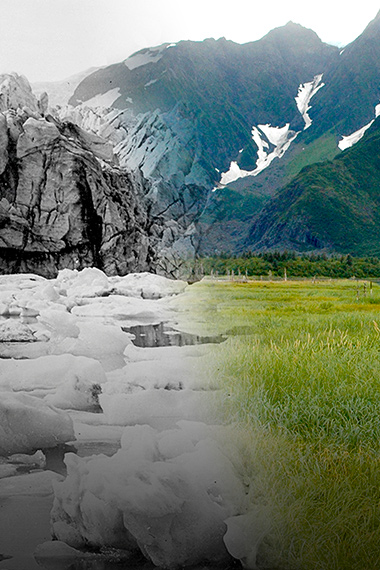
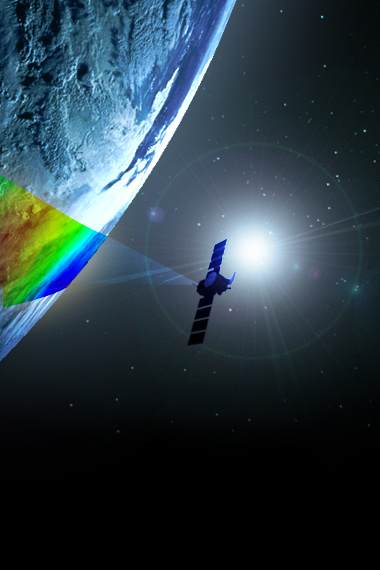
Scientists use observations from the ground, air and space, along with theoretical models, to monitor and study past, present and future climate change. Climate data records provide evidence of climate change key indicators, such as global land and ocean temperature increases; rising sea levels; ice loss at Earth’s poles and in mountain glaciers; frequency and severity changes in extreme weather such as hurricanes, heatwaves, wildfires, droughts, floods and precipitation; and cloud and vegetation cover changes, to name but a few.
Find Out More: A Guide to NASA’s Global Climate Change Website
This website provides a high-level overview of some of the known causes, effects and indications of global climate change:
Evidence. Brief descriptions of some of the key scientific observations that our planet is undergoing abrupt climate change.
Causes. A concise discussion of the primary climate change causes on our planet.
Effects. A look at some of the likely future effects of climate change, including U.S. regional effects.
Vital Signs. Graphs and animated time series showing real-time climate change data, including atmospheric carbon dioxide, global temperature, sea ice extent and ice sheet volume.
Earth Minute. This fun video series explains various Earth science topics, including some climate change topics.
Other NASA Resources
Goddard Scientific Visualization Studio. An extensive collection of animated climate change and Earth science visualizations.
Sea Level Change Portal. NASA's portal for an in-depth look at the science behind sea level change.
NASA’s Earth Observatory. Satellite imagery, feature articles and scientific information about our home planet, with a focus on Earth’s climate and environmental change.
Shutterstock credits: wandee007 (left), Amy Johansson (middle), Avatar_023 (right).

Food consulting plays a very important role in building a successful restaurant or food business. A professional Food Consultant can help entrepreneurs develop strong food concepts, optimize menus, and improve kitchen efficiency. Many restaurant owners struggle with maintaining food quality, cost control, and menu planning, and that is where expert guidance becomes valuable. Companies like Lucky Consultant provide professional support in menu engineering, kitchen planning, and operational strategies. With the right food consulting approach, restaurants can enhance customer experience and achieve long-term growth in the competitive hospitality industry. This is definitely an insightful topic for anyone planning to start or improve a food business.
ReplyDeleteFor more please visit the site to get freshdeal with P remimum item https://www.luckyconsultant.com/Food-Consultant
Launching a food business can be complex, and a Restaurant Startup Consultant makes the process smoother and more strategic. They assist with concept development, location planning, budgeting, branding, and operational setup. With industry expertise, they help avoid common mistakes and ensure a strong foundation for success. From licensing to menu creation, every step is guided with precision. A startup consultant not only saves time and resources but also increases the chances of building a profitable and scalable restaurant business in a competitive market.
ReplyDeleteFOR CONSULTANCU PLESE REACH OUT US AT https://www.luckyconsultant.com/
A well-designed bar can significantly boost a restaurant’s revenue and customer experience. Hiring a skilled Restaurant Bar Consultant helps in creating the perfect bar layout, drink menu, and operational flow. From mixology trends to staff training, expert consultants ensure everything runs efficiently. Businesses working with Lucky Consultant often see improved customer engagement and higher profitability. Their knowledge of bar setup and management adds great value, especially in competitive markets. Investing in the right consultancy not only enhances your brand image but also creates a memorable experience that keeps customers coming back again and again.
ReplyDeletehttps://www.luckyconsultant.com/